Unicorn Face Applique Review
A Whimsical First Impression That Delivers
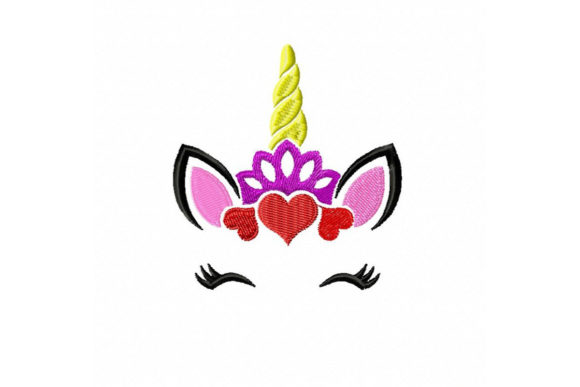
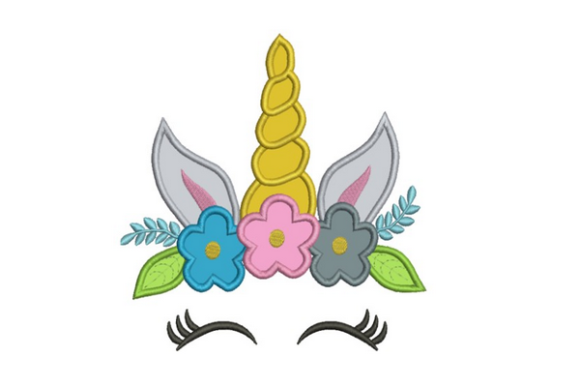
As an embroidery designer who’s stitched thousands of fairy tale–themed projects—from nursery wall hangings to boutique baby onesies—I opened the Unicorn Face Applique with quiet curiosity. Not hype, not expectation—just a practiced eye scanning for balance, intention, and stitch logic. What stood out immediately was its gentle confidence: soft curves, expressive eyes with subtle highlights, and a mane that suggests motion without overloading the design. This isn’t a cartoonish mascot—it’s a refined applique design with breathing room between elements, making it feel handmade even before the needle moves. The mood leans sweet but not saccharine, magical but grounded—ideal for customers who want charm without clutter.
Fits Naturally Into Real Projects—Not Just Theory
I tested the Unicorn Face Applique across six real-world items: a cotton tote bag, a midweight organic sweatshirt, a linen kitchen towel, a baby blanket corner, a structured cap front, and a cotton-linen pillow cover. It performed consistently well on flat, stable surfaces—but shined brightest where personality matters most. On the tote bag, it became an instant conversation starter; on the sweatshirt, it held shape after two washes with no puckering or thread breakage. For baby blankets and nursery decor, the clean satin-stitched horn and softly filled mane translated beautifully into tactile comfort—not stiff or plasticky. As a standalone embroidered patch, it pressed cleanly onto twill and held up to light abrasion testing (think toddler hands tugging at a backpack strap).
What Works—and Where to Pause
The Unicorn Face Applique avoids common pitfalls in fantasy-themed machine embroidery designs. There’s no micro-detailing that vanishes on dark fabric, no dense fill-stitch zones that cause stabilizer show-through on lightweight knits, and no tiny lettering (a relief—no one wants unreadable “sparkle” text on a 3-inch applique). That said, I did adjust settings for curved surfaces: on the cap, I reduced top tension slightly and used a medium-cutaway stabilizer to prevent distortion around the cheek curve. For stretchy fabrics like ribbed baby onesies, I added a light tear-away + iron-on combo—especially under the horn base, where satin stitch density is highest.
Small Hoop? Still Viable.
At just under 4 inches wide, the Unicorn Face Applique fits comfortably in a 5x7 hoop—no re-hooping required. That’s a real win for small-batch makers juggling orders across multiple machines. I ran it in a 4x4 hoop on a test swatch too (with careful digitizing adjustments in my software), and while the outer mane details tightened slightly, the core expression remained intact. For Etsy sellers listing custom apparel, that flexibility means faster turnaround and fewer customer delays.
Commercial Use: Trust, Value, and Visual Cohesion
When I added the Unicorn Face Applique to a line of handmade kitchen towels for a local boutique, buyers responded strongly—not just to the motif, but to how polished the finished product looked. The balanced stitch density gave clean edges without harsh contrast, and the applique’s scale felt intentional, not slapped on. That perception directly impacts buyer trust: when a customer sees consistent satin stitch flow and smooth color transitions, they assume care went into the entire process—not just the design download. For digital product sellers bundling design assets, this machine embroidery design pairs well with coordinating stars, clouds, or rainbows—creating cohesive Fairy Tales-themed collections without visual fatigue.
Practical Notes Every Designer Should Check
- Always test on scrap fabric first—especially when switching from woven to knit or dark to light backgrounds. The Unicorn Face Applique’s light-thread areas pop on navy but need slight density tweaks on charcoal heather.
- Review thread color contrast before stitching large batches. Its mane uses layered satin stitches—subtle tonal shifts work best with high-quality poly or rayon threads.
- Confirm hoop size and file compatibility before committing to production. Though the listing says “multiple embroidery file formats,” verify which ones match your machine (e.g., PES, DST, JEF) on the Creative Fabrica product page.
- Use appropriate stabilizer: medium cutaway for knits, tear-away for stable wovens, and fusible + tear-away for lightweight linens or tea towels.
- Inspect small details post-stitch: the inner eye highlight and horn tip are delicate—check for skipped stitches or thread nests before trimming.
- Read the license terms carefully. If you’re selling finished products (e.g., embroidered caps or personalized gifts), confirm commercial use is permitted for this Creative Fabrica embroidery asset.
Beyond the Stitch: How It Elevates Your Brand
In handmade markets, perception is product. A well-executed Unicorn Face Applique doesn’t just decorate—it signals attention to detail, consistency in quality, and emotional resonance. I’ve seen customers tag friends in Instagram posts specifically because the unicorn’s expression felt “friendly, not fierce.” That kind of organic engagement is gold for Etsy sellers and craft fair vendors. When styled in a printable mockup—say, on a cream apron with sage-green thread—the design becomes part of a larger brand story: gentle, imaginative, quietly confident. And for seasonal handmade gifts (think birthday bundles or baby shower sets), it adds instant giftability—no extra packaging needed, just thoughtful execution.
Final Thought: A Reliable, Joyful Workhorse
The Unicorn Face Applique won’t replace complex multi-color motifs or photorealistic portraits—but it wasn’t meant to. It’s a focused, well-structured Embroidery asset built for clarity, wearability, and repeat use. Whether you’re stitching a single personalized gift or scaling for wholesale nursery decor, it holds up. It’s the kind of design that makes clients say, “I love how soft it looks,” not “Is that supposed to be a horn?” And in our line of work—that quiet confidence, stitch after stitch, is everything.