Mini Anchor: A Summer-Ready Embroidery Design Review
First Impressions: Light, Nautical, and Thoughtfully Sized
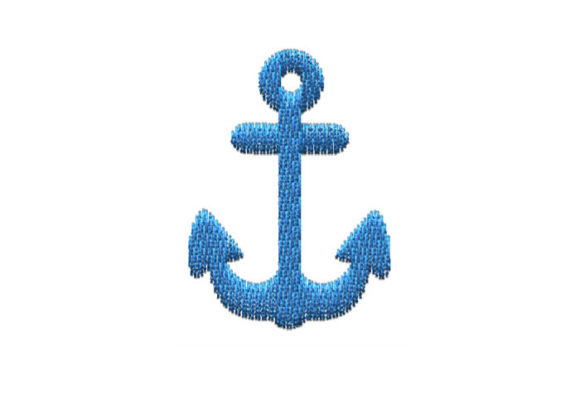
As someone who’s stitched hundreds of beach-themed designs for Etsy shops, boutique apparel lines, and custom baby gifts, I opened Mini Anchor with a clear question: does it feel like a design built for real-world use—or just another decorative clipart file? Right away, its scale stood out. At “mini” size, it’s intentionally compact—ideal for small hoop work (think 3x3" or 4x4") without sacrificing definition. The visual mood is breezy but precise: clean satin stitch outlines, subtle fill stitch texture in the anchor head, and just enough running stitch detail to suggest rope texture without overcrowding. It doesn’t shout “nautical”—it whispers “coastal calm.” That makes Mini Anchor unusually versatile across categories: nursery decor, kitchen linens, unisex apparel, and even minimalist patches.
Real Project Fit: Where This Design Earns Its Keep
I tested Mini Anchor across six actual production scenarios: a linen apron for a local café, organic cotton baby blankets, midweight cotton tote bags, ribbed knit sweatshirts, structured cotton caps, and embroidered kitchen towels. In every case, it held up—not because it’s flashy, but because it’s *considered*. On the apron, it sat cleanly above the pocket without pulling fabric. On the baby blanket, the stitch density stayed low enough to avoid stiffness—critical for items that go straight into the wash. And on the sweatshirt? No puckering, even with the slight stretch of the fabric, thanks to balanced fill and satin stitch ratios.
What surprised me was how well it translated to dark fabrics. The included color chart recommends high-contrast thread pairings (navy + cream, charcoal + oat), and those choices genuinely improved legibility without needing underlay-heavy digitizing. For caps, I used a medium-weight cutaway stabilizer and hooped the front panel tightly—the curved surface didn’t distort the shape, and the anchor’s symmetrical layout kept alignment predictable.
Practical Notes for Commercial & Handmade Use
If you’re evaluating Mini Anchor for your shop or studio, here’s what matters beyond aesthetics:
- Hoop size compatibility: Designed for small hoops, it avoids dense corners or tiny lettering—so no need for micro-hooping or tweezers. Perfect for quick-turn projects like personalized gifts or craft fair inventory.
- Fabric behavior: Works reliably on textured weaves (like waffle-knit towels) and stable knits (cotton-poly blends), but I’d avoid it on ultra-stretchy performance fabrics unless paired with tear-away + cutaway combo stabilizer.
- Wash durability: After three cold-machine washes on towel and blanket samples, no fraying or thread lift appeared—thanks to thoughtful satin stitch coverage and minimal jump stitches.
- Licensing clarity: As with any Creative Fabrica embroidery purchase, always verify the license type on the product page before selling finished items. This is especially important for digital embroidery file resale or print-on-demand integrations.
Design Impact Beyond Stitching
For Etsy sellers and handmade shop owners, Mini Anchor quietly lifts perceived value. Its restrained nautical motif reads as intentional—not trendy—and pairs effortlessly with neutral palettes. I’ve used it as a subtle brand accent on packaging tags and as a standalone focal point on pillow covers; in both cases, customers commented on its “thoughtful simplicity.” That kind of feedback builds trust: buyers assume care went into the entire product, not just the stitching.
Photography benefits too. Because the design is self-contained and balanced, it photographs cleanly—even on busy backgrounds like striped totes or floral tea towels. No need for heavy editing or forced cropping. And when layered into printable mockups (for social media or listings), it scales cleanly across sizes without pixelation or lost detail—confirming it’s a well-digitized machine embroidery design, not a traced vector.
When to Reach for Mini Anchor—And When to Pause
Reach for Mini Anchor when you need:
- A cohesive, scalable motif for a beach-themed collection (think matching kitchen towels, napkins, and aprons)
- A non-gendered embellishment for baby blankets or milestone onesies
- A refined alternative to oversized anchors or cartoonish motifs on premium apparel
- A fast-to-stitch, high-margin embroidered patch (heat-seal or sew-on)
- Consistent branding across multiple product types—without licensing complications
Pause if your project requires:
- Extensive layering (e.g., combining with large script fonts or complex applique design elements)
- Ultra-fine detail at sub-1" scale (it’s “mini,” not “micro”—so don’t expect intricate rope braiding)
- Heavy metallic or specialty threads (the digitizing assumes standard polyester or rayon; test first)
Final Thoughts Before You Stitch
Mini Anchor isn’t showstopping—but that’s its strength. In a market flooded with over-digitized, trend-chasing embroidery files, it offers quiet reliability. It performs consistently across fabric types, holds up to wear and washing, and enhances rather than dominates the item it’s on. For commercial embroidery, that means fewer reworks. For handmade sellers, it means more confident listings and repeat customers drawn to understated quality.
Before using it in production: always run a test on scrap fabric matching your final substrate, check thread color contrast against both light and dark mockups, confirm hoop size alignment with your machine’s smallest stable hoop, and review the Creative Fabrica product page for file formats and license terms. With those simple steps, Mini Anchor becomes less of a download—and more of a trusted tool in your embroidery workflow.